Showing posts with label manual focus. Show all posts

Monday, January 3, 2022

Lens review: The Porst Color Reflex MC Auto 50mm f/1.4 G

This review is about the Porst Color Reflex MC Auto 50mm f/1.4 F lens. I must admit that I hadn't heard of this specific lens before I was doing research on its bigger brother, the Porst Color Reflex MC Auto 55mm f/1.2 F lens. As it happens, an eBay seller had both the 55mm f/1.2 (early f/22 version) and 50mm f/1.4 for sale. The f/22 version of the 55mm/1.2 went for € 139. I was however intrigued by the 50mm/1.4 so I bid on it and was able to purchase it for a mere € 56.


Like its bigger brother this lens was made in Japan for the German Photo Porst chain of camera stores. I have since managed to find that the Porst lenses in K mount were actually produced by Cosina, thereby confirming my hunch. It is no surprise that both lenses have the same kind of style, the later f/16 version of the 55mm/1.2 and this 50mm/1.4 look very much alike. 

The 50mm/1.4 has a nice solid feel to it. You can tell that these were lenses that were made to last. 

Specifications:

Focal length:                        50mm

Minimal focus distance:        0.5 meters

Aperture:                             f/1.4 - f/22

Aperture blades:                  8

Lens elements:                    7

Diameter:                            49mm

Mount:                                Pentax K

Manufacturer:                     Cosina

Built:                                  1970s-1980s

Use

This lens is equipped with the Pentax K mount. As with the 55mm/1.2 its focus ring turns to the left towards infinity. Again this may seem a bit unnatural at first for Pentax users as the Pentax lenses turn to the right.

Focusing is smooth and in general, the lens has a nice feel to it. I've used this lens with Pentax film cameras and with a digital Canon EOS camera via an adapter. Due to the design of the K mount these lenses will not fit APS-H and full frame EOS cameras, the mirror will hit the back of the lens. K mount lenses will only work on EOS cameras with an APS-C sensor (much like the EF-S mount). 

Images

The images you see below were shot with a Canon EOS 90D set at ISO 200. These images were converted from RAW to JPEG, slightly cropped (to just show the chessboard) and resized. No other actions were taken in Photoshop.


f/1.4


f/2.8


f/4


f/8


f/16

As you can see at f/1.4 subject isolation is great! Wide open it also shows chromatic aberration (CA) which disapears when the lens is stopped down. At f/4 it is almost gone and at f/8 there is no sign of it. Wide open there is also some vignetting, although this does not show on these slightly cropped images. As with the f/1.2 version I found it hard to focus with this lens on the EOS 90D which shows, the f/2.8 and f/4 shots are slightly out of focus. When using these lenses solely on AF cameras I do recommend getting a split-image focusing screen for better accuracy.

In the field

I fitted the Porst Color Reflex MC Auto 50mm f/1.4 G to my Pentax LX, loaded it with Fomapan 100, teamed up with fellow photographer Joeri van Veen and headed out for some shots. 
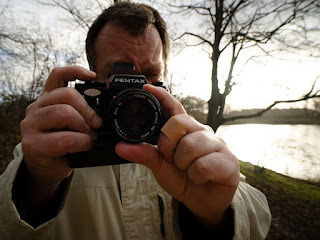
In the field the lens is easy to operate, the fact that it focuses the 'other' way round did not hinder me in any way. And as for the results, judge for yourself:
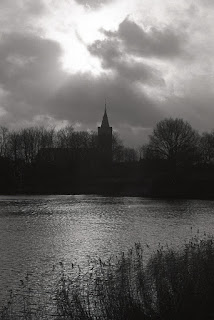
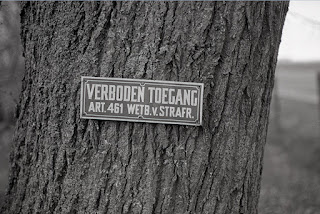
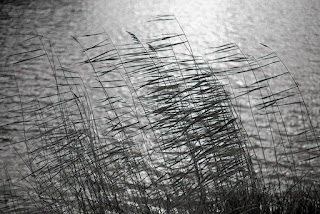
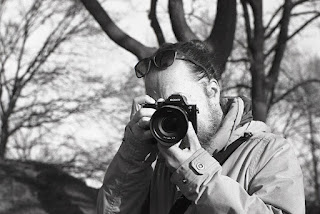
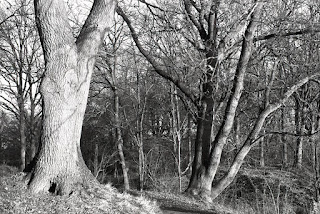

The harsh winter light posed no problems for this lens. Only when shooting directly into the sun the back light bleached out the subject somewhat as can be seen below.
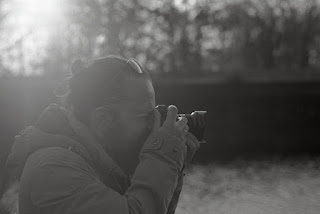
All in all I found this lens to be a solid performer, both wide open and stopped down. When using it with the Pentax LX I found focusing no issue at all, whilst using it with a digital camera without a split-image focusing screen was sometimes challenging wide open. For the price this lens is a fine performer for as far as I am concerned, this is a keeper.


Sunday, October 17, 2021

Lens review: The Mir-38 65mm f/3.5

This review is about the Mir-38 65mm f/3.5 lens. This is a medium format lens built by Arsenal for their medium format cameras. As a medium format lens, the 65mm falls between the 80mm standard lens and the 45mm wide angle lens. Not quite a wide angle, but certainly wider than a standard lens. Sort of a 40mm lens in 135 film parlance. The Mir-38 supplemented and later replaced the Mir-3 65mm f/3.5 in the Arsenal line-up and was built in an early and late version. The early version can be recognized by the 'Takumar-style' focusing ring and was replaced in the 1980s by the late version pictured below. The specifications below apply to both versions, however the two Mir-38s I own are both later versions so my findings are limited to the late model only.

The Mir-38V 65mm f/3.5 (late model)

Specifications:

Focal length:                        65mm

Minimal focus distance:        0.5 meters

Aperture:                             f/3.5 - f/22

Aperture blades:                  6

Lens elements:                    6 elements in 5 groups

Diameter:                            72mm

Mount:                                Salyut/Kiev and Pentacon six

Manufacturer:                     Arsenal

Built:                                  1972-1993

Use

Both the early and late versions of this lens were built by Arsenal in Kiev with two different camera mounts: A screw mount for their Salyut/Salyut-C/Kiev 88 series cameras called the Mir-38V and the Pentacon six mount for their Kiev 6S/Kiev 60 series cameras plus the Kiev 88CM called the Mir-38B. For this review I used lenses with both mounts, a 1984 Mir-38B and a 1990 Mir-38V. 

My Kiev 88 with the 1990 Mir-38V

My Pentax 645D with the 1984 Mir-38B

The biggest difference between these two lenses is of course the lens mount, but the 1990 Mir-38V also has a Depth of Field (DoF) preview button, something the 1984 Mir-38B lacks. Both lenses focus fine although the focusing rings from both lenses feel a bit "heavy" in use. Both stop down from f/3.5 to f/22 without issue. I also noted that the 1990 Mir-38V has a rather loose aperture ring.

In the field

I used the Mir-38V on my Kiev 88 and the Mir-38B with a P6-Pentax 645 adapter on my Pentax 645D. The DoF preview button on the Mir-38V is said to be a potential light leak so I used a bit of gaffer tape to cover it up. The loose aperture ring on the 1990 Mir-38V was a bit of a pain in the lower regions, it meant constantly checking if the aperture hadn't changed accidentally. Other than that, both lenses were a joy to use and the heavy focusing didn't bother me at all once in the field.

The images below were shot with my Kiev 88 fitted with a 645 back and loaded with Fomapan Profi Line Classic 100 120 film, the negatives scanned by an Epson V850 Pro and resized in Adobe Photoshop from 9,968 x 7,247 pixels to 1,000 x 727 pixels.


The color images were shot with my Pentax 645D, converted from RAW to JPEG and resized in Adobe Photoshop from 7,264 x 5,440 pixels to 1,000 x 749 pixels.


I am really pleased with the images the Mir-38 65mm f/3.5 produces. Clean crisp images with a lovely color rendering. 

Wide open, 100% crop

Bokeh, left upper area of the image, 100% crop

Wide open this lens produces nice sharp images and as can be seen on both 100% crops the out-of-focus bokeh is smooth and not distracting at all. On a full frame medium format camera this 65mm lens provides a very good semi-wide angle lens and on a digital medium format camera with a crop sensor an excellent standard lens. It is not the fastest medium format lens around but its performance is good all across the board. Recommended.

Saturday, June 26, 2021

Lens review: The Porst Color Reflex MC Auto 55mm f/1.2 F

This review is about the Porst Color Reflex MC Auto 55mm f/1.2 F lens. This lens was made in Japan for the German Photo Porst chain of camera stores. Two versions of this lens were made, an early version with f/22 as the smallest f-stop and a later version with f/16 as the smallest f-stop. 

This lens review is about the later f/16 lens. The two versions look pretty much the same, but apart from the f/22 f-stop there are a few differences. The f/22 closest focal distance is 0.5 meters, with the f/16 this is 0.6 meter. Cosmetically there are a few differences too, For instance, the f/22 version has the lens serial number on the front, whilst the f/16 variant has the serial number on the aperture ring. The f/16 version also has the Pentax style raised alignment dot, something the f/22 version does not have. The upper barrel of both lenses is slightly different too, although they both share the 55mm filter thread. These lenses look very much like contemporary Cosina lenses so they could have been made by Cosina. I however haven't found any confirmation of this.

I bought this lens about 5 years ago as sort of a backup for my Pentax 50mm f/1.2 lens. The price of the Porst that time was € 156, pretty cheap for an f/1.2 lens. I paid quite a bit more, € 429, for my Pentax version. As it was intended as a backup lens it never saw much use until recently, when I decided to give this lens some much-needed attention.

Specifications (f/16 model lens):

Focal length:                        55mm

Minimal focus distance:        0.6 meters

Aperture:                             f/1.2- f/16

Aperture blades:                  8

Lens elements:                    6

Diameter:                            55mm

Mount:                                Pentax K

Built:                                  1970s-1980s

Use

This is one of the bigger standard lenses in the 50mm - 55mm range. Its focus ring turns to the left towards infinity. This may seem a bit unnatural at first for Pentax users as the Pentax lenses turn to the right. Focusing is smooth and in general, the lens has a nice feel to it. I've used this lens with Pentax film cameras and with digital Canon EOS cameras via an adapter. Due to the design of the K mount these lenses do not fit APS-H and full frame EOS cameras much like the EF-S series of lenses. K mount lenses will only work on EOS cameras with an APS-C sensor (crop factor 1.6). 

Images

The images you see below were shot with a Pentax MZ-S loaded with Fomapan Profi Line Classic 100 black and white film and a Canon EOS 90D set at ISO 200.


f/1.2


f/2.8


f/5.6


f/11

As you can see at f/1.2 subject isolation is excellent! Wide open it also shows chromatic aberration (CA) which dissapears when the lens is stopped down. At f/2.8 it is almost gone and at f/5.6 there is no sign of it. The further you stop down, more pieces get in focus until at f/11 all pieces are in full focus. At f/1.2 there is also a bit of vignetting, although the APS-C sensor crops out some of it. 


full photo, f/1.2


crop of the center of the first photo 

In these shots you can clearly see the paper thin focus area when the lens is wide open. Again wide open it shows CA which is clearly visible at the edges of the coins in the second cropped image. In this shot the vignetting at f/1.2 is quite strong.


f/11

There appears to be some very slight barrel distortion, although the chess board itself is a bit crooked in that sense so it might not be the best subject to judge distortion with.

In the field


lens stopped down


Lens stopped down


Lens wide open


Lens wide open

Conclusions

Overall I really like this lens. It produces dreamy images when shot wide open and when stopped down this lens performs excellent with crisp sharp images. Of couse, this is a 1970s-1980s lens so focusing and setting the aperture have to be done manually. Focusing is tricky wide open due to its very narrow depth of field, I find that I prefer using it with classic cameras that have a split-screen focusing screen. The fact that is suffers from vignetting and CA wide open is unfortunate but can be fixed in post quite easy. When stopped down these are no longer issues. And then there is the price. This is a really  affordable f/1.2 lens. All in all, I find this to be a fine standard lens and I find myself wishing that I had started working with this lens sooner. I'm interested what you think and what your experiences with this lens are. Drop me a line in the comment section below.