Showing posts with label medium format. Show all posts

Saturday, November 13, 2021

Camera review: The Kiev 60

The camera

This review is about the КИЕВ 60 (Kiev 60) single lens reflex camera. Built by the Arsenal plant this Soviet (later Ukrainian) medium format single lens reflex camera was the successor to the КИЕВ 6C (Kiev 6S) camera model. The Kiev 6S was introduced in 1970 and was produced until 1986. The camera design was no doubt influenced by the 1956 East German Praktisix and copied its lens mount. Not only the Soviets were enamored by the 'big conventional SLR' design, the Japanese Asahi Optical Company released the Pentax 6x7 in 1969 that shares the same design philosophy. In fact, when I first laid hands on a Kiev 60 I was struck by how similar is was to the Pentax 6x7 - my first medium format camera. In 1984 the Kiev 6S was replaced with the Kiev 60 and this camera was built to at least 1999. It was sold by Arsenal for much longer though thanks to a formidable stockpile of Kiev 60s. In fact, one can still purchase new Kiev 60s, rebranded as ARAX 60s, today from ARAX which took over the Arsenal stock after Arsenal closed down.

My Kiev 60 as it was when I obtained it, fitted with an Arsat-C 80mm f/2.8

Specifications

Camera:                        КИЕВ 60 (Kiev 60)

Built:                            1984-1999

Mount:                          Pentacon 6

Shutter speeds:             2-1/1000 seconds, B

Self timer:                    yes

Mirror lock-up:            no

Film type:                    120 film

Weight:                        1,950 grams with lens

Light metering:            no, add-on TTL prism with light meters available

Battery:                        none for the camera, 3x LR44 for the TTL prism

Shooting

Like the Pentax 6x7, the Kiev 60 is a big son of a gun. There is nothing delicate about this camera, it was built like a T-55 tank and it will last a lifetime. It is a very straightforward camera, anyone with 35mm SLR camera experience will immediately know how to operate it. It shoots twelve of those big and gorgeous 6x6 negatives on 120 film. But the best thing of all: It uses the Pentacon 6 mount! Hello Carl Zeiss Jena lenses! So we've got a simple, usable design and those superb Carl Zeiss Jena lenses. Is all good? Well, there are issues reported with this camera. Some have overlapping frames and/or light leaks. Not so desirable. Also it has no mirror lock-up (MLU) which could be quite useful.

My Kiev 60 dates from 1994 and is thus an Ukrainian rather than a Soviet camera. It was originally bought by my uncle Wolfgang and he very kindly gave it to me. It hadn't been used for a while and when I ran a roll through it it had developed a light leak. I decided to have it refurbished by ARAX and MLU added. I also had it redone in a black finish and the mirror box flocked to reduce flaring.

My Kiev 60 after overhaul and modification

My Kiev 60 with a Carl Zeiss Jena MC Biometar 80mm f/2.8 fitted

Images

I took my Kiev 60 into the field today to see how it would perform after the overhaul and modification.


Kiev 60 with a Carl Zeiss Jena MC Biometar 80mm f/2.8

All in all my refurbished Kiev 60 really delivers. After the attention it got from ARAX this camera doesn't only look and feel like new, it works like new! No issues with film spacing, no issues with light leaks and a fully operational MLU. And using the Carl Zeiss Jena lenses without having to manually open up, focus and then stop down again is, well, a luxury.

I really like this camera. I realize that not everyone gets one as a present but these medium format cameras are still affordable. I would however recommend investing in having it refurbished if you're serious about shooting with it.


Saturday, October 2, 2021

Camera review: The Kiev 88

The camera

When you see a Kiev 88 the first thing you notice is how much it resembles a Hasselblad V series camera. This is not by accident. When Hasselblad introduced the 1600F model camera, built from 1949 until 1953 they introduced a new camera design. This was not lost on engineers in the Soviet Union and it was decided that the Arsenal factory in Kiev would develop a camera based on the Hasselblad 1600F design. In 1957 they came up with the Салют (Salyut) camera which was basically a reverse-engineered 1600F. At the time the similarity of the two cameras was explained by stating that both Hasselblad and Arsenal based their camera design on that of a camera prototype designed in Germany at the end of World War Two. A nice story but as this mythical prototype has never been found or shown elsewhere that is probably all it is. 

Now the Salyut and the Hasselblad 1600F look very much alike but the Salyut is no exact copy. Both are modular camera's with detachable lenses, film backs and viewfinders. The lenses and film backs however are not interchangeable with the Hasselblad versions. The viewfinder actually is compatible with not just the Hasselblad 1600F but also its V system successors. These are smaller differences too, for instance the fastest shutter speed on the first Salyut models was 1/1500th of a second whilst the Hasselblad had a 1/1600th of a second shutter speed (hence the name).

The original Salyut camera was produced between 1957 and 1972 and during its production run several changes were made. The first series had a self timer and a maximum shutter speed of 1/1500th of a second, the second series lost the self timer and the third series had a reduced maximum speed of 1/1000th of a second. All of these were supplied with the Industar-29 80mm f/2.8 lens. Export versions were built under the names of Zenith 80, Revue 6x6, Revue 80 and Vitoflex. Around 50,000 Salyuts of all versions have been built.

My Kiev 80 as bought

Next in line was the Салют-C (Salyut-S), an improved Salyut produced from 1972 until 1981. Around 30.000 were made. The main difference was the fully automatic diaphragm that the original Salyut lacked. It was standard equipped with a Vega-12B 90mm f/2.8 lens. Like the original Salyut, this camera was exported under different brand names like Soyuz, Zenith 80 (second use of this name) and Kiev 80. Some Kiev 80s were supplied with a different standard lens, the Volna-3 80mm f/2.8. My Kiev 80 however came with the standard Vega-12B lens.

My Kiev 88 as bought

The Salyut-S was succeeded on the production line by the Киев 88 (Kiev 88). These models were produced between 1980 and 1994. The biggest difference between the Kiev 88 and its predecessor was the addition of a hot shoe on the camera body. The Kiev 88 also came with a new TTL metering prism This combination was called the Kiev 88 TTL but as the viewfinder is detachable the only difference between the Kiev 88 and 88 TTL is the use of the metering prism. Its standard lens was the Volna-3 80mm f/2.8. Like its predecessors the Kiev 88 was also exported. In the US it was sold under the Cambron name but usually it was sold as a Kiev 88, the main difference was that this was written in Latin rather that Cyrillic script.

Last in the line was the Kiev 88CM. By now the Soviet Union had collapsed and Arsenal was now a Ukrainian company. The Kiev 88CM (by now Arsenal stopped using the Cyrillic script) was produced from 1994 up until the factory closed in 2009. The biggest difference between the Kiev 88 and the 88CM was the new lens mount. All previously built Salyuts and Kievs had a screw mount not unlike but different from the original Hasselblad mount. With the Kiev 88CM that lens mount was replaced with the Pentacon Six mount. This meant that beautiful lenses such as the Carl Zeiss Jena lenses built for the Pentacon Six could be used on Kievs. As Arsenal already produced their lenses in this mount for the Kiev 60 series of cameras both the original Soviet/Ukrainian lenses in Pentacon Six mount and other lenses who use the Pentacon Six mount can be used.

The closure of the Arsenal factory was not the end of the Kiev line of cameras. There were loads of unsold Kiev 88CMs around and companies like Hartblei and Arax took over that stock. Both companies already offered repairs and upgrades to this line of cameras and started producing their own versions using unsold Kiev 88CMs, upgrading them and selling them on under their own brand names. 

Arax offered the Arax CM and CM-MLU versions, the last one adds a mirror lock up (MLU) to the camera. Hartblei offered the Hartblei 1006 and 1006 Master models with the Pentacon Six mount with the Master version also receiving MLU and Hartblei 1008 and 1008 Master models with the original screw mount. Hartblei also offered a commonality with Hasselblad, theirs are the only Kiev cameras modified to take Hasselblad film backs. The Hartblei modified film backs can also be used on Hasselblad V type bodies, something that cannot be done with the original film backs. 

Unfortunately both companies no longer sell their brands of the Kiev 88 cameras. Hartblei stopped selling and servicing these cameras around 2018. A shame really, I would have loved to get my hands on one of those Hartblei 1006 Master cameras with that Hasselblad commonality. In 2021 Arax also stopped selling new cameras as their supply of Arsenal built bodies ran out. However Arax still offers repairs and modifications to all Salyut/Kiev models at this time (October 2021).

Back to the Kiev 88. My copy was built in 1985 and when I acquired mine (together with a 1976 Kiev 80) it was still in full working order. At that time I had just bought my first Arax version of the Kiev 88CM which I was very happy with. With Arax also servicing, repairing and upgrading all models of this design I decided a few months ago to send mine off to the Ukraine for servicing. I decided to have everything serviced and MLU added. It would also get a black coating replacing the silver look.


My Kiev 88 after servicing

Shooting

Shooting with the Kiev 88 (or any of the other camera models described above for that matter) is not for the impatient. Are you in a hurry? Go grab something digital. But if you're willing to spend the time then shooting with this camera is fun. Now when shooting with these Kievs there are a few things you'll always have to remember. By far the most important is to cock your shutter before setting the shutter speed. Doing it the other way around will most likely damage the shutter mechanism. Now, your shutter needs to be cocked before you can compose your shot anyway (cocking it also lowers the mirror) so it is best to just learn and use the mantra 'before doing anything else, cock the shutter'. My Kiev 88 came with both the folding view finder and the TTL metering prism. Working with the folding view finder takes some getting used to. You're looking at a mirror image and when composing moving the wrong way happens almost inevitably the first few times - or more... I opted to fit the TTL viewfinder that I bought together with my Arax after trying the folding view finder. Shooting handheld is no problem with these cameras but I would recommend a tripod when using the folding view finder or when using lower shutter speeds. So, you've set op your shot, cocked the shutter, composed, focused, selected the proper shutter speed and aperture and removed the metal sheet from the film back so you're good to go. One last focus check and CLACK, there the shutter and mirror go. A very satisfying sound.

Images

The Kiev 88 delivers twelve beautiful 6x6 images when using the standard film back. There is also a 645 film back that gets you sixteen 6x4.5 shots. I used the standard film back that came with my Kievs, fitted the Vega-12B 90mm f/2.8 lens and shot some black and white. A few examples, straight from the scanner:


Sunday, May 30, 2021

Shooting the Carl Zeiss Jena Sonnar 180mm f/2.8 wide open

According to photographers such as Martin Henson and Zach Horton the Carl Zeiss Jena Sonnar 180mm f/2.8 is a joy to shoot wide open. Sharp where it counts and a dreamy bokeh. The 180mm f/2.8 was one of the first Carl Zeiss Jena lenses I bought to complement my Pentax 645 set. As my example of this lens had slow moving aperture blades (when they were inclined to move at all...) it didn't get as much use as some of my other Carl Zeiss Jena lenses. But seeing the results of this lens wide open at f/2.8 I decided to take the 645Z - 180mm combo out for a spin.


The Carl Zeiss Jena Sonnar 180mm f/2.8

My version predates the 'zebra' design and is one of the older models of this lens. It was produced from 1961 to 1963 and is single coated. The 180mm is somewhat on the heavy side but little wonder as this lens is built like a tank. I found that, when coupled to my Pentax 645 cameras, it is fine to shoot hand-held but I might be biased as I am used to shooting long telephoto lenses hand-held - one of the perks of aviation photography. To fit this lens - or any lens with the Pentacon Six mount - on my Pentaxes I use a P6-645 adapter. There are plenty of these on eBay where they sell for about € 30.

In the field

In the field, or rather, in the quiet serenity of the Naarden Old Cemetery I set out to see what this lens could do. I am quite pleased with the results. Good separation at f/2.8, the bokeh is pleasing and not distracting and the lens has that dreamy look you can't seem to get with modern optimized-for-digital lenses. The fact that this lens has only single coating is no doubt responsible for that. There is surprisingly little CA on the images this lens produces which surprised me. I found it difficult to focus at times without the aid of a split-screen focusing screen though but that is more the result of fitting this lens to my digital Pentax (which lacks a split screen focusing screen) than anything else. 

I'll leave you with a few shots from today's outing.


Saturday, April 3, 2021

Medium format slides

Slides

Since I started shooting medium format film I've always had a preference for transparency or slide film. This was mainly because in the 35mm world I used slide film 99% of the time and my work flow was centered around slides. Slides scan beautifully and it is a joy to see them projected. 


Unlike 35mm, when shooting medium format there are different sizes with regards to slide formats. I have camera's that shoot 6x4.5, 6x6 and 6x7 format slides. For scanning purposes no big issue but if you want to project these slides there is no 'one fits all' slide projector. 6x4.5 and 6x6 have the same size of slide mount so can both be used on a 6x6 slide projector. 6x7 alas is too big for that. 

Projecting

Nowadays it is uncommon to see a medium format slide projector. I was lucky to obtain one, a 6x6 projector. This means that my 6x4.5 and 6x6 camera's are loaded with 120 slide film most of the time. I tend to use my 6x7's for black and white and colour negatives mostly these days.

Ok, now I owned a projector. Next on my list was obtaining the necessary slide mounts. Although I was able to buy some 6x4.5 mounts new I usually have to depend on the second-hand market. I have been lucky to get my hands on a mixed supply of 6x4.5 and 6x6 glass mounts but these need to be cleaned before use. I do so by washing them in warm soapy water. I've also heard other stories on how to clean these mounts, how do YOU do it? Please drop me a line in the comments section below describing how you clean your medium format glass slide mounts.

Scanning

My work flow now is to scan the slide first, then mount it. These are huge transparencies to scan so this takes a while. I use an LS-8000ED Coolscan and scan at maximum capacity. Scanning a 6x6 slide gets me a whopping 80.5 megapixel 500 MB file.

The results

Last February I shot a roll of Provia 100F with my ARAX CM-MLU. This is basically an improved Kiev 88CM, when using these you definitely get those old-school vibes. I scanned these earlier today, below you'll find a small selection of winter landscapes.


  • Location Naarden
  • Camera: ARAX CM-MLU
  • Lens: ARAX MC 80mm f/2.8
  • Film: Fujichrome Professional Velvia 100F 
  • Scanner: Nikon LS-8000ED

Monday, March 29, 2021

The guns of Naarden

Recently I've acquired a Pentax 645N that I yet had to test. Today I decided to do just that and take the 645N for a walk in the fortress city of Naarden, Naarden Vesting. I grabbed my SMC Pentax-FA 645 Zoom 45-85mm f/4.5 lens and some 120 medium format film, joined up with fellow photographer Joeri van Veen and off we went.


Photo: Joeri van Veen

Naarden has a long military history and has been a fortified city for centuries. Parts of the 17th century fortifications survive to this day and have been added to ever since. Part of both the Old and New Dutch Water Lines, Naarden remained garrisoned in one way or another until the end of World War Two. The last MoD buildings were turned over to the city for civilian use in 1986.


The guns of Naarden

Dotted around the cityscape of Naarden are several artillery pieces. I've shot some of them before but pretty much took them for granted. These would be my photo-theme for today. When you enter the city from the north you'll find the first gun on your left.


This is a 30-pounder gun cast in the province of Luik in 1855. The serial number on the barrel is hard to read but has three digits and ends with a 6. As with all the guns currently displayed in Naarden the barrel is on loan from the excellent Vestingmuseum. The gun carriage was new-built in 2018.

When you head east you'll find gun number two in front of the Arsenaal building. This was the last building that the MoD transferred to the city in 1986. There had been guns mounted in front of the Arsenal before as sort of a gate-guard but these had been removed quite some time ago.


Now a 30-pounder with serial number 75, cast in 1831 once again guards the Arsenaal. This artillery piece was ceremonially unveiled in 2020. 

When you continue south you'll pass the quarters of the Foundation Fortress City Naarden. They are the ones responsible for restoring the gun barrels and building the gun carriages. I was pleasantly surprised to find two unused barrels stored in front of their quarters.


The barrel on the left is 30-pounder number 3. On the right is 12-pounder 23, cast in Luik in 1818.

When you follow the city walls towards the west you'll get to the Utrecht Gate. Guarding this gate is a 20-pounder gun.


This is 20-pounder gun 56, cast in 1839. The gun carriage was built new in 1988 and restored in 2018.

If you continue on a westerly heading you'll get to the Vesting museum. This museum, which covers the history of the fortress of Naarden, is currently closed due to the COVID-19 restrictions. However, when passing the gate you'll get a glimpse of what the museum has to offer.


Heading north from here takes you to the former entrance of the Vesting Museum. Two guns guard the gate here.


On the left is serial number 171, cast in 1811. 


On the right is serial number 186, again cast in 1811. 


Inspecting number 186. Photo: Joeri van Veen.

I managed to shoot one and a half roll of 120 film on my Pentax 645N. Once I finish the second roll of film I'll be sending these away for development. For now these digital photo's will have to do :-).

Location: Naarden
Camera: Pentax 645Z
Lens: SMC Pentax-DFA 645 55mm f/2.8 AL [IF] SDM AW

Monday, March 1, 2021

A tribute to the Flying Leatherneck Aviation Museum

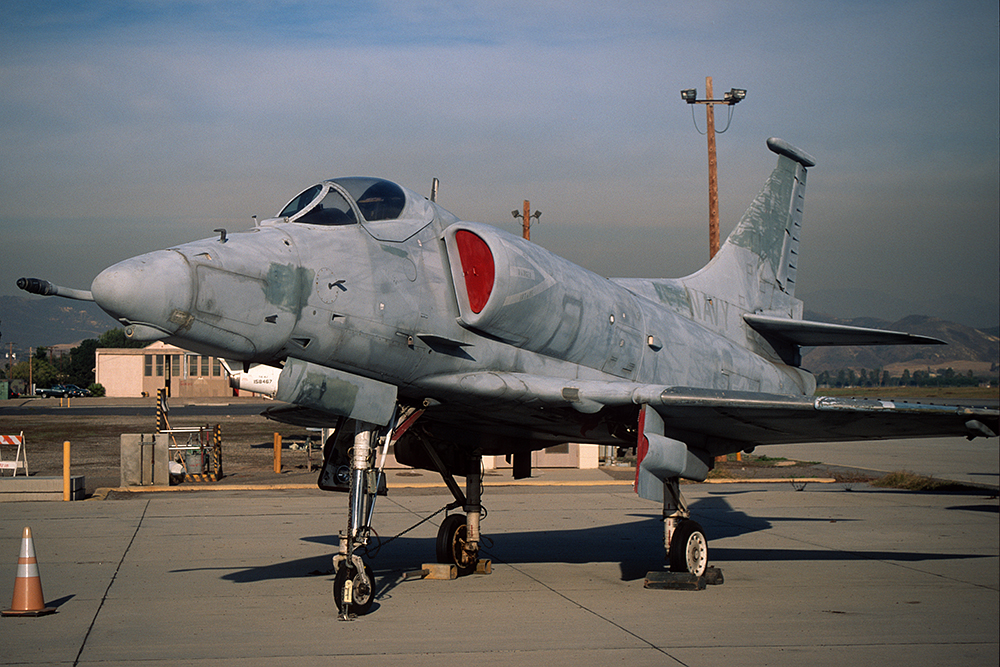
Located at Marine Corps Air Station Miramar the Flying Leatherneck Aviation Museum showcases the history of US Marine Corps aviation. A few days ago it was announced that the museum would close its doors on April 1st, 2021 permanently due to 'financial costs'. I have been lucky enough to visit the museum twice while at El Toro end more recently whilst at Miramar. It was on my itinerary for my March 2020 west coast trip but then COVID-19 intervened...

Origins

The Flying Leatherneck Aviation Museum opened in 1989 at MCAS El Toro and remained there until the base closed in 1999. Since then, it had been located at MCAS Miramar. It boosts an impressive collection of aircraft, ranging from World War Two Wildcat and Corsair fighters to modern-day F/A-18 Hornets. 

The end..?

For the museum itself? Yes. MCAS Miramar is no longer prepared to spend money on the museum, choosing instead to invest in 'higher priority missions' such as safety gear. However, museum staff are appealing this decision. As for the collection, the museum has stated that they wish to redistribute their aircraft, with the nearby San Diego Air and Space Museum and the USS Midway Museum mentioned as possible recipients. So hopefully this will not be the end of the 40+ aircraft currently in the hands of the museum.

The exhibits

I thought I'd celebrate the museum by showing some of the photos I've made there over the years as a tribute. Enjoy!

1993


1997


2018