Saturday, September 2, 2023

Camera review: The Exa Ic

The camera

This review is about the Ihagee Exa Ic single lens reflex camera. Ihagee from Dresden in Germany is perhaps most well known for their Exakta line of cameras but they also manufactured the Exa line of cameras alongside the Exaktas. Three models were produced, the Exa (1951-1962), the Exa I series (1962-1987) and the Exa II (1960-1969). The Exa and Exa I are basically different versions of the same camera with interchangeable view finders. The Exa II was a simplified camera that was produced alongside the Exa and Exa I.

Ihagee Exa Ic fitted with an Exaktar 55mm f/1.4

All Exa cameras, with the exception of the Exa Ib and Ic, use the Exakta mount that Ihagee introduced with their Exakta cameras. The Exa Ib and Ic use the M42 mount, enabling the use of loads of M42 lenses from all kinds of manufacturers. As with the preceding Exa Ia, the position of the shutter button is located on the left side of the camera body. This is a leftover from the early Exakta designs, kept in place to be able to use the same automatic aperture lenses that the Exakta uses. As the Exa Ib and Ic use M42 lenses this was not a necessity any longer but in order to simplify production the shutter button stayed where it was.

These Exa cameras have a guillotine type shutter rather than the more usual focal-plane shutter. This results in slower shutter speeds than we are used to these days with a modest top speed of 1/175th of a second.

Specifications

Camera:                Ihagee Exa Ic

Built:                    1985-1987

Mount:                  M42

Shutter speeds:     1/30th - 1/175th of a second, B

Self timer:            no

Size:                     130 mm wide, 97 mm high* and 46 mm deep

Light metering:     no

Hot shoe:              no

Battery:                none

with the pentaprism viewfinder fitted

Shooting

My copy is an Exa Ic built in the mid-1980s by VEB Certo-Kamerawerk Dresden under license from Ihagee. At that time both Ihagee and Certo were part of the VEB Pentacon conglomerate. Certo built the last series of the Exa Ib and all of the Exa Ic models. Certo built Exas can be identified by the letter C before the serial number.

I managed to obtain my Exa Ic together with an Exa Ib I have yet to shoot. All Exa Ic models have a beautiful black finish. This Exa is pristine and works like a charm. I just love the simple smooth lines of these cameras.  

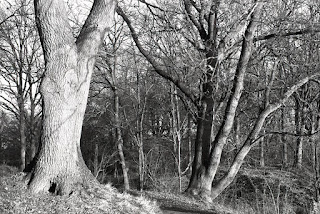
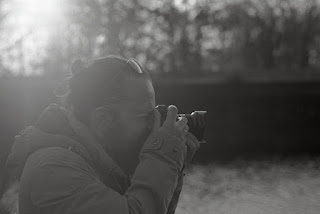
Using this camera feels very intuitive apart from the shutter button which as mentioned is located on the left side of the camera body. I've fitted the Exa Ic with an Exaktar 55mm f/1.4 lens (no relation with Ihagee for as far as I am aware as I believe this particular lens was built by Sankor), loaded up some Fomapan 200 and went off to the Lake Naarden nature preserve.

All in all I am pretty pleased with the performance of the Exa Ic. When I reviewed the Exa Ia I stated that I was thinking of adding an Exa Ib (or Ic) to my collection to use in combination with my M42 lenses. I aquired both. :-) 

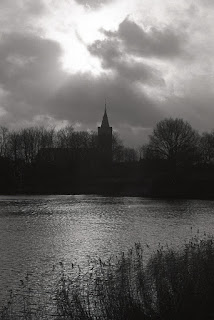
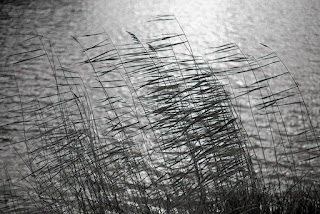
Images


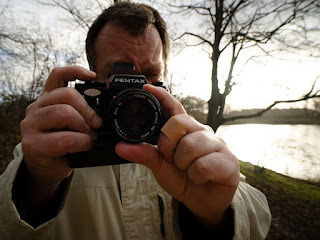
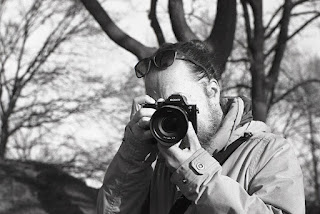
Fellow photographer Pedro and his Exakta


Sunday, April 9, 2023

Adapter review: The Fittings4you Exakta lens to Canon EOS camera adapter

The adapter

This review is about the Fittings4you Exakta lens mount to Canon EOS camera adapter. Now, I usually don't review adapters but I made an exception here, there are a few thing one needs to know before ordering an Exakta lens mount to Canon EOS camera adapter. My adapter is manufactured by Fittings4you but I suspect that my experiences apply to all brands.

The adapter fitted on the Oreston 50mm f/1.8

Specifications

Adapter:               Fittings4you Exakta lens mount to Canon EOS camera adapter

Camera mount:     Canon EF

Lens mount:          Exakta

Ihagee, the manufacturer of the Exakta cameras, never built lenses for their cameras. Manufacturers such as Meyer-Optik Görlitz, Carl Zeiss Jena, Schneider-Kreuznach and Isco Göttingen (to name just a few) were responsible for the construction of lenses with the Exakta mount. These manufacturers each built their own 'version' of the Exakta mount and this is important to know when using such an adapter. I found that my Meyer-Optik Görlitz lenses fit this adapter perfectly, however my Carl Zeiss Jena lenses simply won't fit. 

Another shot of the Oreston

Fitting the adapter on any kind of EOS camera is simple enough, I've tried several film and digital Canon EOS bodies and they all fit perfectly. There is no play whatsoever. However, there are a few practical issues when using Exakta mount lenses on a Canon EOS body. 

1. When using Meyer-Optik Görlitz lenses I found that when shooting with a film of full frame digital camera the mirror will not return to the 'down' position after taking a shot. I have not been able to test this with the Carl Zeiss Jena lenses I own since they won't fit this adapter but I would assume that this would be the case with any other brand too. A digital EOS with an EF-S mount has no such problems.

2. Exakta mount lenses usually come in two variants, those with and without an aperture coupling device that protrudes from the lens. The design of the built-in flash on the EOS xxD, xxxD and xxxxD bodies prohibits the use of lenses fitted with this device as there is simply no room to fit and to turn the lens. The built-in flash protrudes too far from the camera body. Lenses without this device work without problems.

Shooting

Unhappy leaves (Lydith 30mm f/3.5)

On my Canon EOS 90D the adapter fits snugly. I've been taking shots using the Meyer-Optik Görlitz Lydith 30mm f/3.5 and Oreston 50mm f/1.8. The fit of both lenses is good, no play whatsoever. This adapter will allow me to get to know these lenses a lot better and that is a big plus. Just too bad that I cannot use them on my full frame camera. But when factoring in the limits you can have a lot of fun with these old lenses on your Canon EOS camera with an APS-C (crop) sensor.

Saturday, April 1, 2023

Winter 2023

Now that spring has arrived I find myself looking back to winter - my photography last winter that is. So what have I been up to in the last three months?

45 Squadron Phenom 100 ZM337 landing at RAF Cranwell

Winter weather

Contrary to popular belief we sometimes actually have winter weather in Dutch winters. Not much, true, but I guess we lucked out. With actual ice and snow around my good friend Joeri and I dropped everything we were doing and headed out into the freezing cold.

Joeri trying out my Pentax 50mm f/1.2 lens

Skating at Lake Naarden

Just a few days before I managed to get my hands on a 45mm pancake lens. A perfect time to see what this could do. Joeri thought pretty much the same thing, trying out my Pentax 50mm f/1.2 lens on his Sony A7. Check out his thoughts on this combo.

My small automobile after the first snow

Snow on the meadows

More snow on the meadows

Sadly the snow thawed away after a few days, being replaced by rain...

Carl Zeiss Jena Biotar 80mm f/2.8

Another find was a pristine Carl Zeiss Jena Biotar 80mm f/2.8 P6 mount lens at a local photography fair. I was keen to put this lens through its paces so I called up Joeri and off we went.

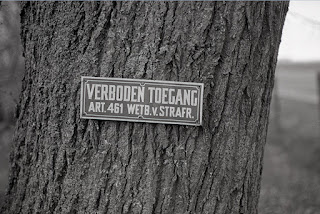
No trespassing

Joeri toting his trusty Sony A7

The grey brick road

In this case I grabbed my Pentax 645Z and used an P6-Pentax 645 adapter. I am very satisfied with the way the lens performed, this copy is a keeper.

Canon EF 35mm f/2

Another lens I got acquainted with was the Canon EF 35mm f/2. I've had this lens for a while now but somehow I always reached for the 24-105 or similar lens when out and about with my Canons. This is the original 35mm, not the later IS version. I actually enjoyed the 35mm more than I expected. I shot both digital and film with this lens, here is an example of a film shot:

Soviet anti-aircraft gun at the Vesting Museum

Ihagee Exa Ia

This winter I bagged not only a few lenses but a new (to me) camera as well. 

Ihagee Exa Ia fitted with a Domiplan 50mm f/2.8

This really is a fun little camera. It certainly is different from the mainstream cameras and I guess that this is part of the fun. I did a write-up of my experiences if you're interested.

Cobra Warrior 2023

In the last days of March I decided to travel to the UK to catch RAF exercise Cobra Warrior 2023. With aircraft from faraway places like India and Saudi Arabia attending this made for an interesting few days in England.

An Indian Mirage 2000 in typical English weather

The flight line at RAF Barkston Heath

A Finnish Air Force Hornet in the evening sun

Flying daily patrols over eastern Europe is this RC-135W

All in all I am quite pleased with the shots I managed to take.

Sunday, March 26, 2023

Camera review: The Exa Ia

The camera

This review is about the Ihagee Exa Ia single lens reflex camera. Ihagee from Dresden in Germany is perhaps most well known for their Exakta line of cameras but they also manufactured the Exa line of cameras alongside the Exaktas. Three models were produced, the Exa (1951-1962), the Exa I series (1962-1987) and the Exa II (1960-1969). The Exa and Exa I are basically different versions of the same camera with interchangeable view finders. The Exa II was a simplified camera that was produced alongside the Exa and Exa I.

Ihagee Exa Ia fitted with a Meyer-Optik Görlitz Lydith 30mm f/3.5

All Exa cameras, with the exception of the Exa Ib and Ic, use the Exakta mount that Ihagee introduced with their Exakta cameras. The Exa Ib and Ic use the M42 mount, enabling the use of loads of M42 lenses from all kinds of manufacturers. Ihagee didn't manufacture lenses for their Exakta's and Exa's themselves, this was done by companies such as Carl Zeiss Jena, Meyer-Optik Görlitz and others. 

The Exa cameras have a guillotine type shutter rather than the more usual focal-plane shutter. This results in slower shutter speeds than we are used to these days with a modest top speed of 1/175th of a second.

Specifications

Camera:                Ihagee Exa Ia

Built:                    1962-1977

Mount:                  Exakta

Shutter speeds:     1/30th - 1/175th of a second, B

Self timer:            no

Size:                     130 mm wide, 97 mm high* and 46 mm deep

Light metering:     no

Hot shoe:              no

Battery:                none

* with the pentaprism viewfinder fitted

Shooting

My copy is an Exa Ia built in the mid-1970s. It has the Exakta mount and was also built with different names (Elbaflex 175, Exakta 100 and VX-100). I managed to obtain my Exa Ia together with a few lenses and an Exakta camera which needs some TLC before I can shoot with it. The Exa is pristine and works like a charm. I love the simple smooth lines of these cameras and part of the attraction of the Ihagee cameras stems from the fact that they were built in Dresden as there is a family connection there.

Using this camera feels very intuitive apart from the shutter button, this is located on the left side of the camera body. This is a leftover from the early Exakta designs, kept in place to be able to use the same automatic aperture lenses that the Exakta uses.

I've used two lenses on the Exa thus far, the Meyer-Optik Görlitz Domiplan 50mm f/2.8 and the Meyer-Optik Görlitz Lydith 30mm f/3.5. I also own an Exakta-Pentacon six adapter that I wanted to use with the Carl Zeiss Jena Biotar 80mm f/2.8 but alas, this adapter doesn't lock into place in the mount of my Exa. I've got a few more 50mm lenses and a 135mm lens to try out in the coming days and weeks.

I've taken the camera to some of my local haunts, the Vesting Museum and the fortress city of Naarden.

Images


All in all I am pretty pleased with the performance of the Exa Ia. I expected this to be a backup for my Exakta but it has really stepped up to be the main camera for my Exakta mount lenses. In fact, I am thinking of adding an Exa Ib to my collection to use in combination with my M42 lenses. This is how much I like this little camera.

Saturday, December 31, 2022

The last photos of 2022

So it's 16:15 hours on December 31st, 2022 and I just got back from my 'daily mile'. I decided to bring a camera today to get some last shots this year. As the weather is less than nice today I grabbed something digital to capture the last day of 2022. 

Rain... (Pentax 645Z, CZJ 80mm f/2.8 at f/2.8)

... and wind. (Pentax 645Z, CZJ 80mm f/2.8 at f/2.8)

Not much to see today I'm afraid so let's move along quickly.

The best shot

So what was my best photograph of 2022? As usual, my friends over at Flickr got to decide with photograph in my flickr stream was the best. They had the following thoughts on that:


According to my Flickr pals the winner is...

Opel Kadett, Pentax LX
Gear

Not much happened on the gear-front. I managed to pick up a 45mm pancake lens with a Pentax K mount, I've tried out this lens a few weeks back but need to get the films developed first before I can comment on it any further. Another find was a mint copy of a Carl Zeiss Jena 80mm f/2.8 in Pentacon 6 mount, this is the lens I shot the above rainy photo's with. Lastly I've stumbled upon an Exacta set recently. I have yet to see if the set I've obtained functions properly. One for a side project in 2023 perhaps?

Winter is coming

It is supposed to be winter now but with lots of rain, strong winds and temperatures in the double digits (Celsius, not Fahrenheit) it looks suspiciously like autumn. But fear not, winter is coming to this blog in 2023. I've decided to cover 2023 in four three-month projects with winter being the first one. Watch this blog for more. Other plans include a collab with fellow photographer Joeri, we will be venturing into the world of vlogging. Let's see what 2023 will bring!


Saturday, September 3, 2022

An 8.5/8.8 cm Flugabwehrkanone M39(r) in Holland

I've known for a while that the Vesting Museum (fortress city museum) in Naarden, the Netherlands, had a World War Two anti-aircraft gun in its collection. I shot a picture of it two weeks ago and back home tried to identify the gun.

The gun on August 20th, 2022. Shot with A Pentax 645 fitted with an SMC Pentax-A 645 150mm f/3.5 lens, loaded with Fomapan Profi Line Classic 100/120 film, developed in Adonal and scanned with an Epson Perfection V850 Pro.  

At first glance it looks like a regular German 8.8 cm Flugabwehrkanone (FlaK). Whilst this gun generally looks the same it is however something entirely else. It is of Soviet origin but, as it turns out, with German DNA.

I knew of its Soviet origins from an earlier visit to the museum so that is where I started my research. Now the Soviets in the 1930s developed three models of anti-aircraft guns:

The first model was the 76-мм зенитная пушка обр. 1931 г. (3-К) or 76 mm M1931 air defense gun. The model 1931 was based on the Rheinmetall 7.5 cm Flugabwehrkanone L/59. Through the BÜTAST agency the Soviets bought four prototypes and the design drawings of the 7.5 cm FlaK L/59 in 1930 and used these as a basis for a 76mm anti-aircraft gun that would be known as the 3-K or model 1931 in service, named after the year it was introduced in service. It was a towed gun and used the ZU-29 two-wheeled mount with four legs, two of which could be folded during transportation.

After about 4,550 3-Ks were produced between 1932 and January 1940 production was halted after the introduction of the 76-мм зенитная пушка обр. 1938 г. or 76 mm M1938 air defense gun (no K designation). This was the same gun as the 3-K but fitted to a different mount that was quicker when changing from the transport-mode to the firing-mode. This was the four-wheeled ZU-8 mount. About 960 M1938s were built in the period 1938-1940. The reason no more were produced was that work had also started on an upgunned variant of the M1938, fitted with a 85mm barrel.

This was the 85-мм зенитная пушка обр. 1939 г. (52-К) or 85mm M1939 air defense gun (52-K). The first prototypes were built in 1938 and it was in production from 1939 until 1945 with a total of about 13,422 guns produced. During the early years of World War Two all three models were used but quickly the M1939 replaced all preceding models on the front line.

Now this is where it becomes interesting as all these guns look very similar. The main difference between the M1931 and the M1938/M1939 is the mount (ZU-29 or ZU-8) and the main difference between the M1931/M1938 and the M1939 is the bigger 85mm gun barrel on the M1939. This bigger barrel also has a larger muzzle brake and that in particular is a distinguishing feature.

The gun on August 28th, 2022. This was shot with a Pentax 645Z fitted with an SMC Pentax-FA 645 Zoom 45-85mm f/4.5 lens, as are all following photographs.

Whilst the few shots I took gave a great overall impression I decided to go back and this time take some more detailed shots in order to determine which of the three models was on display. This is what I discovered:

First: The serial number of the gun is 3273. This confirms the actual identity of the gun but as I'm not aware of any serial number listings I can't deduce the model from it.

Serial number 3275, built in 1938.

Second: The year of manufacture is 1938. Again this does not rule out any of the models because the M1931 serial production was from 1932 to 1940, the serial production from the M1938 was from 1938 to 1940 and by 1938 the first prototypes of the M1939 were produced.

The ZU-29 mount. This is where the weels would be attached.

Another look at the ZU-29 mount.

Third: The gun mount is a model ZU-29. Now this was only fitted to the M1931 model.

Fourth: The gun barrel has the bigger muzzle brake that was only fitted to the M1939 model.

Fifth: During the war the Wehrmacht captured loads of M1931s, M1938s and M1939s on the battlefield and put them to good use themselves. Most of the captured guns were modified to take the same 88mm shells the dreaded 8.8 cm Flugabwehrkanone used and according to the museum staff this is one such example. Furthermore, in a 2020 tweet from former museum director Bas Kreuger he mentions that the museum traded the 'Russian M35/85' with the Overloon War Museum. He adds that the gun has a pre-production barrel.

Sixth: I also emailed the Vesting Museum about the origins of the gun. Current museum director Tammo ter Hark wrote back, stating that this is an 'M85' that they have on loan from the Overloon War Museum and that it arrived about ten years ago.

Another view of the 8.5/8.8 cm Flugabwehrkanone M39(r)

So what model is it? My conclusion is that this is in fact a German upgunned Soviet 85-мм зенитная пушка обр. 1939 г. (52-К) or 85mm M1939 air defense gun (52-K) based on the fact that the gun itself has the bigger muzzle brake. The fact that both museum directors talk about an '85', probably referring to the caliber 85mm and that Bas Kreuger mentions the pre-production barrel support this conclusion. That the gun is mounted on the older ZU-29 mount is odd, but this could have happened either during or after the war. The German designation for an M1939 converted to 88mm in Wehrmacht use is 8.5/8.8 cm Flugabwehrkanone M39(r) with the (r) standing for Russia, indicating that this is a beutewaffen or captured weapon. It came from the Overloon War Museum, a museum that was created in 1946 with a collection that consisted of weaponry that was left behind after the 1944 battle of Overloon. This would make the museums 8.5/8.8 cm FlaK M39(r) a veteran of this battle. It is fair to assume that this gun was also used as an anti-tank gun in this battle, much like the Germans used their own 8.8 cm FlaK guns against tanks. A 1965 video shows this gun at the Overloon museum.

All in all this makes for a very interesting exhibit in the Vesting Museum. But why is it displayed there? The answer to that lies in the same Twitter message from former director Bas Kreuger. He reacted to a tweet from Klaas Meijer, in which Klaas speaks about the remains of a bunker complex formerly used by the Kriegsmarine Lehrbatterie Naarden (naval training battalion Naarden). Here Kriegsmarine personnel manning the Atlantic Wall were trained on the 8.5/8.8 cm Flugabwehrkanone M39(r) and similar 10.5 cm FlaK guns, shooting at targets over the IJsselmeer (Lake IJssel). This gun was brought to the Vesting Museum to tell that story.


Monday, January 3, 2022

Lens review: The Porst Color Reflex MC Auto 50mm f/1.4 G

This review is about the Porst Color Reflex MC Auto 50mm f/1.4 F lens. I must admit that I hadn't heard of this specific lens before I was doing research on its bigger brother, the Porst Color Reflex MC Auto 55mm f/1.2 F lens. As it happens, an eBay seller had both the 55mm f/1.2 (early f/22 version) and 50mm f/1.4 for sale. The f/22 version of the 55mm/1.2 went for € 139. I was however intrigued by the 50mm/1.4 so I bid on it and was able to purchase it for a mere € 56.


Like its bigger brother this lens was made in Japan for the German Photo Porst chain of camera stores. I have since managed to find that the Porst lenses in K mount were actually produced by Cosina, thereby confirming my hunch. It is no surprise that both lenses have the same kind of style, the later f/16 version of the 55mm/1.2 and this 50mm/1.4 look very much alike. 

The 50mm/1.4 has a nice solid feel to it. You can tell that these were lenses that were made to last. 

Specifications:

Focal length:                        50mm

Minimal focus distance:        0.5 meters

Aperture:                             f/1.4 - f/22

Aperture blades:                  8

Lens elements:                    7

Diameter:                            49mm

Mount:                                Pentax K

Manufacturer:                     Cosina

Built:                                  1970s-1980s

Use

This lens is equipped with the Pentax K mount. As with the 55mm/1.2 its focus ring turns to the left towards infinity. Again this may seem a bit unnatural at first for Pentax users as the Pentax lenses turn to the right.

Focusing is smooth and in general, the lens has a nice feel to it. I've used this lens with Pentax film cameras and with a digital Canon EOS camera via an adapter. Due to the design of the K mount these lenses will not fit APS-H and full frame EOS cameras, the mirror will hit the back of the lens. K mount lenses will only work on EOS cameras with an APS-C sensor (much like the EF-S mount). 

Images

The images you see below were shot with a Canon EOS 90D set at ISO 200. These images were converted from RAW to JPEG, slightly cropped (to just show the chessboard) and resized. No other actions were taken in Photoshop.


f/1.4


f/2.8


f/4


f/8


f/16

As you can see at f/1.4 subject isolation is great! Wide open it also shows chromatic aberration (CA) which disapears when the lens is stopped down. At f/4 it is almost gone and at f/8 there is no sign of it. Wide open there is also some vignetting, although this does not show on these slightly cropped images. As with the f/1.2 version I found it hard to focus with this lens on the EOS 90D which shows, the f/2.8 and f/4 shots are slightly out of focus. When using these lenses solely on AF cameras I do recommend getting a split-image focusing screen for better accuracy.

In the field

I fitted the Porst Color Reflex MC Auto 50mm f/1.4 G to my Pentax LX, loaded it with Fomapan 100, teamed up with fellow photographer Joeri van Veen and headed out for some shots. 

In the field the lens is easy to operate, the fact that it focuses the 'other' way round did not hinder me in any way. And as for the results, judge for yourself:


The harsh winter light posed no problems for this lens. Only when shooting directly into the sun the back light bleached out the subject somewhat as can be seen below.

All in all I found this lens to be a solid performer, both wide open and stopped down. When using it with the Pentax LX I found focusing no issue at all, whilst using it with a digital camera without a split-image focusing screen was sometimes challenging wide open. For the price this lens is a fine performer for as far as I am concerned, this is a keeper.